
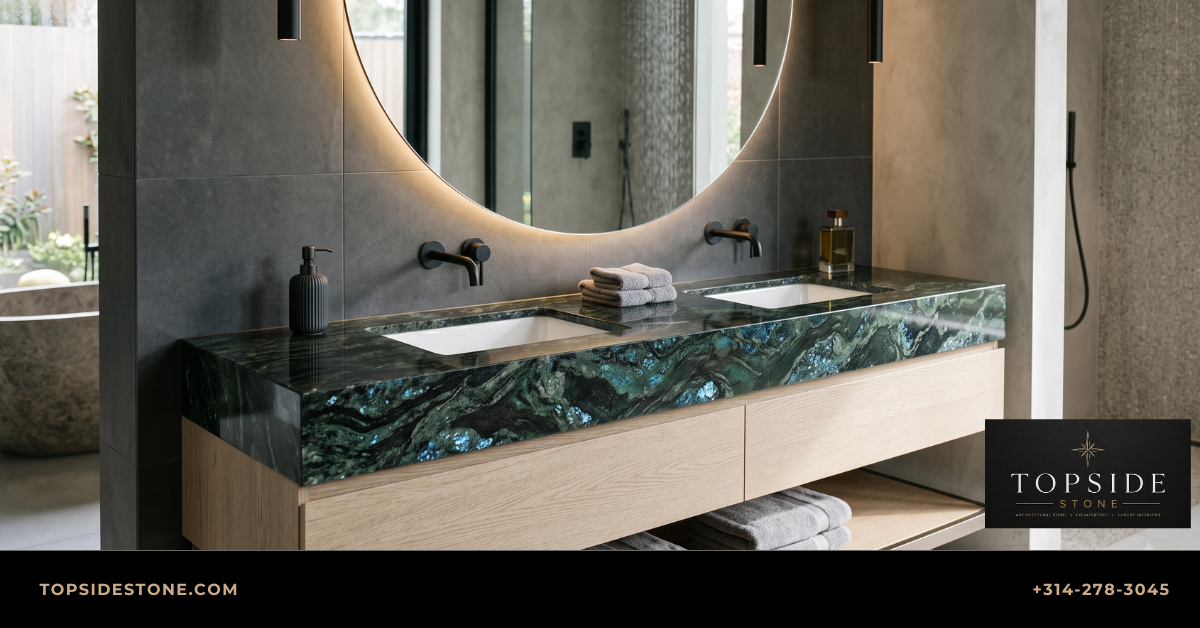
Choosing the right countertop slabs is one of the most important decisions in any kitchen or bathroom renovation. Countertop slabs affect durability, maintenance, appearance, and overall project cost. This guide answers the top questions homeowners ask when selecting kitchen countertop slabs and bathroom countertop slabs, covers slab selection, cost, installation, and maintenance, and helps you choose the best slab for your remodel.
Why countertop slabs matter Countertop slabs set the tone for your space. The right slab selection balances style and function: you want a surface that handles heat, resists stains, and complements cabinets and flooring. Whether you’re researching quartz countertop slab options or comparing granite countertop slab patterns, material choice impacts longevity and return on investment.
Popular countertop slab materials
- Quartz countertop slab (engineered quartz): Non-porous, low maintenance, and available in a wide range of colors and patterns. Popular for kitchen countertop slabs due to stain and scratch resistance.
- Granite countertop slab: Natural stone with unique veining and excellent heat resistance. Granite slabs typically require periodic sealing.
- Marble countertop slab: Luxurious veining and soft, elegant look—best for bathroom countertop slabs or low-traffic areas because marble is more porous and prone to etching.
- Quartzite slab: A natural stone harder than marble with good heat resistance. Often chosen for high-end kitchen countertop slabs.
- Porcelain slab countertop: Extremely durable, heat-resistant, and available in large-format slabs and thin panels ideal for both kitchen and bathroom countertop slabs.
- Soapstone slab and concrete slab: Soapstone offers a matte patina and is naturally resistant to stains; concrete slabs are customizable but require sealing and reinforcement.
- Solid surface slab (e.g., Corian) and high-pressure laminate: Budget-friendly options for bathroom countertop slabs and light-use kitchen surfaces.
Countertop slab selection: top questions answered
- What countertop slab thickness should I choose?
Standard countertop slab thicknesses are 2 cm (3/4″) and 3 cm (1 1/4″). For kitchen countertop slabs and island tops with overhangs, 3 cm is typical because it is stronger and simpler to support. Porcelain slab countertop options can be thinner (e.g., 6–12 mm) but often need reinforced substrate. Consider slab thickness when budgeting and planning edge profiles. - How much does a countertop slab cost?
Countertop slab cost varies by material, slab grade, fabrication complexity, and installation. Expect lower costs for laminate and solid surface; mid-to-high ranges for engineered quartz and granite; higher or competitive pricing for rare natural stone and porcelain slab countertop options. Always include fabrication, cuts for sinks and cooktops, edge profiling, backsplash, and delivery in your countertop slab cost estimate. - Do countertop slabs need sealing?
Natural stone countertop slabs such as granite, marble, and quartzite usually need sealing to reduce staining and moisture penetration. Engineered quartz, porcelain slab countertop surfaces, and solid surface slabs are typically non-porous and do not require sealing. Verify with your slab supplier for specific sealing recommendations for kitchen countertop slabs and bathroom countertop slabs. - What maintenance does each countertop slab require?
- Granite countertop slab: Clean with mild soap and water; reseal periodically depending on porosity.
- Quartz countertop slab: Low maintenance—wipe spills quickly, avoid harsh chemicals and high heat.
- Marble countertop slab: Blot acidic spills to avoid etching; reseal more frequently.
- Porcelain slab countertop: Extremely low maintenance—use non-abrasive cleaners.
- Concrete slab: Reseal regularly and repair chips as needed.
- Solid surface slabs: Repair minor scratches and stains; avoid direct hot pans.
5. Which slabs are best for kitchens vs. bathrooms?
For kitchen countertop slabs, durability and stain/heat resistance are top priorities—quartz, granite, and porcelain slab countertop options rank highly. For bathroom countertop slabs, moisture resistance and aesthetics are important—quartz, porcelain, quartzite, and marble (with care) are common choices.
6. How do color, pattern, and edge profile affect the look?
- Color and pattern: Lighter countertop slabs brighten small kitchens or bathrooms; darker slabs create drama. Natural stone offers unique veining while quartz slab options provide uniform patterns.
- Edge profile: Eased, beveled, bullnose, or ogee edges change the style and can add to countertop slab cost. Simpler edge profiles are less expensive and often easier to maintain.
7. How many slabs do I need and how are slabs measured?
Slabs are measured by area and linear dimensions. A fabricator will template your space and calculate how many full countertop slabs you need, accounting for waste, seams, and pattern matching. For dramatic veining, additional slabs may be required for vein matching across kitchen countertop slabs or bathroom countertop slabs.
8. What is templating and why is it necessary?
Templating is the on-site measurement process after cabinets and appliances are installed. Accurate countertop slab templates ensure precise cutouts for undermount sinks, faucets, and cooktops and avoid costly rework. Most fabricators offer digital or laser templating for precise countertop slab installation.
9. Can I have undermount sinks with every slab type? Undermount sinks are common with stone and quartz countertop slabs. Thin porcelain slabs and laminate typically require reinforced substrate or special mounting brackets for undermount sinks. Ask your counter fabricator which countertop slab options support undermount installation.
10. How visible are seams in countertop slabs? Seams are necessary for long runs or islands exceeding slab size. Material, slab size, veining, and fabricator skill affect how visible seams are. Porcelain and engineered quartz can have less conspicuous seams when installed by experienced fabricators. Discuss seam placement during templating to minimize visual impact.
11. What eco-friendly countertop slab options exist? Look for recycled-content quartz, porcelain slabs made with sustainable processes, salvaged natural stone, and low-VOC resin-based surfaces for greener countertop slab choices. Ask manufacturers for certifications and recycled content percentages.
12. What should I ask a fabricator or countertop contractor? Ask about material grade and source, warranty, sealing and maintenance, lead times, templating and installation process, seam placement, edge profiles, and an itemized countertop slab quote including fabrication, delivery, and installation.
Installation timeline and tips
After templating, fabrication typically takes 1–3 weeks for most countertop slab materials, though custom edges, complex seams, or high demand can extend lead times. Schedule plumbing and cabinet work around templating and installation windows. Protect new countertop slabs during the remainder of your renovation.
Protecting and caring for your countertop slab To protect kitchen countertop slabs and bathroom countertop slabs, use trivets and cutting boards, clean spills promptly, avoid placing hot pans directly on the surface, and follow resealing schedules for natural stone. Proper care extends slab life and maintains appearance.